
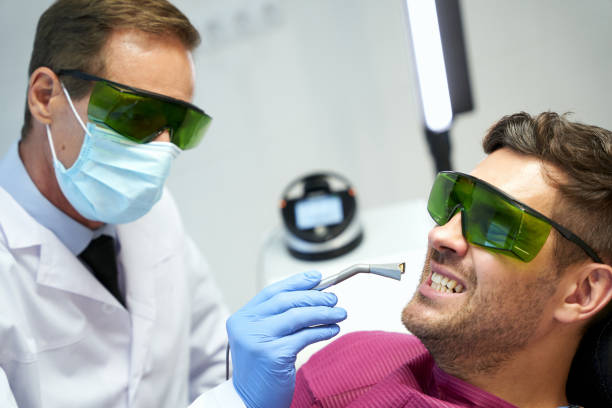
A dental implant affected by peri-implantitis does not automatically need to come out. When enough bone and stability remain around the implant, laser-assisted treatment such as LAPIP may help control the disease and preserve the implant.
This article walks through the warning signs of peri-implant disease, the difference between mucositis and peri-implantitis, and how a dentist evaluates implant prognosis. It also explains what LAPIP therapy is, how it differs from LANAP, and what treatment involves. Patients researching dental implant infection or laser dentistry in Wilmington, DE will find a clear, honest picture of what LAPIP can and cannot do, including the factors that influence implant preservation and the maintenance that helps protect the results.
Dental implants are made of titanium or zirconia, so they cannot develop cavities. But the gum tissue and bone that support an implant are living structures. They can develop inflammatory disease just like the tissue around a natural tooth.
Peri-implant disease starts with bacterial biofilm collecting around the implant. Left untreated, that biofilm triggers ongoing inflammation. Over time, inflammation can damage the tissue attachment and the bone that holds the implant in place. This is more than surface-level gum irritation. It is a progressive condition that affects the entire support system around the implant.
Peri-implant disease generally falls into two stages. Catching it early, at the mucositis stage, gives patients the best chance of reversing it before bone is affected.
| Feature | Peri-Implant Mucositis | Peri-Implantitis |
|---|---|---|
| Tissue Affected | Soft tissue only | Soft tissue and supporting bone |
| Bleeding or Inflammation | Present | Present, often more pronounced |
| Bone Loss | None attributable to the condition | Progressive |
| Pocket Depth | Typically stable | Often increasing |
| Suppuration (Pus) | Uncommon | Possible |
| Reversibility | Often reversible with proper care | Requires active treatment to control |
Because peri-implantitis keeps advancing without treatment, it also represents a growing threat to the implant’s long-term stability. A 2024 clinical review of peri-implant disease confirms this same distinction: mucositis affects the soft tissue only, while peri-implantitis involves that same inflammation plus progressive bone loss.
Untreated inflammation breaks down the tissue attachment around an implant. That breakdown can progress into the supporting bone. As bone volume decreases, the implant loses some of its foundation.
This does not mean an implant with some bone loss is already loose or failing. Many implants with mild to moderate bone loss remain functional and stable for years with proper treatment and maintenance. The relationship between bone loss and implant stability is a spectrum, not a switch.
Peri-implant disease can progress with very little pain, which is part of why regular checkups matter. Patients should watch for:
Because symptoms can be subtle, routine dental visits play a major role in catching peri-implant disease early.
Peri-implantitis rarely comes down to a single cause. It usually develops from a combination of bacterial activity, patient health factors, and the physical design of the implant restoration.
Bacterial biofilm builds up naturally at the junction between the implant and the gum tissue. When biofilm is not disrupted through daily hygiene and professional cleanings, it shifts the local oral microbiome toward bacteria associated with peri-implant inflammation. Over time, this creates the conditions for implant infection and, left unaddressed, allows that inflammation to spread into the tissue and bone supporting the implant.
Patients with a history of periodontitis on their natural teeth face a higher long-term risk around implants as well. This is one reason ongoing periodontal monitoring matters even after an implant has healed successfully. Active gum disease and peri-implant disease often share the same underlying risk factors, which is why patients being treated with LANAP for periodontal disease are typically monitored closely for implant health as well.
Certain patient-level factors are associated with a higher likelihood of peri-implant disease, including:
None of these factors guarantees peri-implantitis will develop. They are considerations a dentist weighs when assessing risk and planning a maintenance schedule.
An implant crown or bridge that is difficult to clean can trap plaque against the gum tissue. Restoration contours, spacing between implants, and the angle of the implant itself all influence how easily a patient can keep the area clean at home.
Bruxism and uneven bite forces can place extra mechanical stress on an implant. Overload is not considered a primary microbial cause of peri-implantitis. Dentists still evaluate occlusion as part of a full assessment, since excess force can compound existing inflammation.
Some implants with peri-implantitis respond well to treatment and remain functional for years. Others have a poor or hopeless prognosis and may need to be removed. The right path depends entirely on the individual implant.
Dentists assess the extent and pattern of bone loss using clinical measurements and imaging. A contained defect on one side of the implant is a very different situation than bone loss that circles the entire implant. How much of the implant surface has become exposed also matters, since more exposure typically means a larger area to treat and decontaminate. Dentists also track whether the bone loss has stayed stable or continued to progress over time, since an actively worsening defect points to a more cautious prognosis than one that has held steady.
Stability is one of the most important factors in prognosis. True implant mobility usually indicates a loss of osseointegration, the direct bone-to-implant contact that keeps an implant fixed in place. Once that connection is lost, the treatment outlook changes significantly.
Decontaminating an exposed implant surface is more complex than cleaning a natural tooth root. Implant surfaces often have a textured design intended to encourage bone attachment, and that same texture can make bacteria harder to remove completely.
Prognosis also depends on whether contributing factors can be managed going forward, including:
LAPIP, or the Laser-Assisted Peri-Implantitis Procedure, is a laser-based protocol built specifically for implants affected by peri-implant disease. It is not a generic laser treatment. LAPIP therapy is designed around the unique anatomy and surface characteristics of a dental implant.
Patients researching laser treatment for peri-implantitis will often see LAPIP described alongside laser periodontal therapy for natural teeth. The two share a similar laser-assisted approach, but LAPIP is adapted for implant-specific conditions.
During LAPIP, the dentist accesses the peri-implant pocket to address diseased and inflamed tissue. The goal is to reduce the microbial burden around the implant while treating the contaminated environment. Healthy tissue is preserved wherever possible.
This description is intentionally conceptual. The specific technique a dentist uses depends on each patient’s presentation and is discussed during a consultation.
A natural tooth root has a different surface structure than a titanium or zirconia implant. Implant surfaces are often designed to be slightly rough to encourage initial bone attachment, but that same texture can allow bacteria to adhere more tenaciously once disease sets in. Addressing the implant surface itself is a central part of managing peri-implant infection.
LAPIP aims to reduce infection and inflammation, stabilize the surrounding tissue, and support clot formation in the treated area. This creates an environment more favorable to healing. LAPIP does not promise complete bone regeneration or a full return to original osseointegration in every case. It aims to control disease and support the best possible outcome for that implant.
LAPIP and LANAP are related protocols, but they are not interchangeable terms. Confusing the two can lead patients toward the wrong expectations about treatment.
| Factor | LANAP | LAPIP |
|---|---|---|
| Treatment Area | Natural teeth | Dental implants |
| Main Condition | Periodontitis | Peri-implantitis |
| Supporting Structure | Periodontal ligament and bone | Osseointegrated implant and bone |
| Primary Goal | Control periodontal disease and preserve teeth | Control peri-implant disease and preserve the implant where possible |
| Laser-Assisted | Yes | Yes |
Patients often ask what LANAP therapy is before understanding how it relates to LAPIP. LANAP, or Laser-Assisted New Attachment Procedure, is a laser periodontal therapy used to treat periodontitis around natural teeth. Patients can learn more about LANAP laser therapy for gum disease and how it fits into a broader gum disease treatment plan.
LAPIP was developed to address the different anatomy and disease process found around implants. While the underlying laser-assisted concept is related to LANAP, the target tissue, the implant surface, and the clinical goals are specific to peri-implant disease.
The protocol a dentist recommends depends entirely on what is being treated. A natural tooth with periodontitis calls for a LANAP-based approach. An implant with peri-implantitis calls for LAPIP. Getting this diagnosis right is the first step in effective treatment planning.
LAPIP treatment at All About Smiles in Wilmington, DE follows a structured sequence from initial evaluation through long-term follow-up.
The dentist reviews symptoms, measures pocket depths, checks for bleeding and suppuration, and assesses implant stability. The restoration, occlusion, and imaging are also reviewed as part of a complete picture.
Before any treatment begins, the dentist determines whether preserving the implant is a realistic goal. This step relies on the bone and stability factors discussed earlier in this article.
Treatment focuses on managing diseased tissue, reducing biofilm, addressing the implant surface, and removing calculus or deposits where present. This step is performed with attention to preserving as much healthy tissue as possible.
After treatment, the goal shifts to supporting clot formation and allowing the tissue to adapt. This phase focuses on creating favorable healing conditions rather than guaranteeing a specific regenerative outcome.
Treatment does not end when the laser procedure is complete. Follow-up visits allow the dentist to track healing and catch any signs of recurring disease early.
Laser-assisted peri-implant treatment can create conditions favorable to healing, and some cases show measurable improvement in supporting tissue. Complete bone regeneration around an implant cannot be guaranteed for every patient.
A clinical study on laser-assisted peri-implant defect treatment found measurable improvements in bone levels among treated patients over a multi-year follow-up period. Results like these vary depending on the individual case, and outcomes should always be discussed with a treating dentist rather than assumed from general research.
A small, contained bone defect on one side of an implant tends to respond differently than an extensive defect that wraps around the implant. Defect shape and severity are major factors in what outcome is realistic.
An implant that is still stable, with intact osseointegration, offers a fundamentally different treatment situation than one that has already lost that bone-to-implant connection. Stability affects both the treatment approach and the expected outcome.
Successful management of peri-implantitis often looks like this instead:
For many patients, this represents a genuinely successful outcome, even without complete bone regrowth.
LAPIP has limits, and being upfront about them builds trust rather than false hope. LAPIP may not be sufficient when an implant has:
When LAPIP is not enough, other options may include surgical treatment, regenerative procedures, implant removal, bone grafting, or eventual replacement. Patients considering implant restoration options after implant loss can review what a replacement process typically involves.
Treatment success depends heavily on what happens after the laser procedure. Ongoing care is what protects the investment made in saving the implant.
Most patients benefit from a personalized recall schedule for periodontal maintenance visits after LAPIP treatment. Recall intervals are typically shorter for patients with a history of peri-implant or periodontal disease.
Effective home care around an implant often includes an interdental brush, floss designed for implant restorations, and water flossing when recommended. Cleaning beneath a bridge or bar-retained restoration deserves extra attention, since these areas are easy to miss.
Dentists compare pocket measurements and X-rays over time to catch small changes early. This longitudinal comparison is often more useful than any single visit, since it reveals trends rather than a single snapshot.
Implant health and periodontal health are connected. Active gum disease around natural teeth can influence the bacterial environment around nearby implants, which is why a whole-mouth approach to periodontal care matters.
LAPIP, or the Laser-Assisted Peri-Implantitis Procedure, is a laser-based treatment designed for dental implants affected by peri-implant disease. It targets diseased tissue and the contaminated implant surface to reduce infection and support a healthier healing environment. LAPIP is implant-specific and differs from general periodontal laser treatments used on natural teeth. A dentist typically recommends it only after confirming that peri-implantitis, rather than a different implant issue, is the underlying cause.
No. LANAP treats periodontitis around natural teeth, while LAPIP treats peri-implantitis around dental implants. Both use a similar laser-assisted approach, but they target different structures and conditions. LANAP works with the periodontal ligament and bone around a tooth root, while LAPIP is adapted for the surface and anatomy of an implant. Getting an accurate diagnosis determines which protocol applies to a specific situation.
In many cases, yes, particularly when enough bone and stability remain. LAPIP can help control infection and inflammation around an implant. Some implants with advanced bone loss or mobility may not be good candidates, so an evaluation is needed to determine realistic outcomes for that implant. A dentist weighs bone levels, stability, and the patient’s overall risk factors before recommending treatment.
Yes, in advanced cases. Peri-implantitis progressively damages the bone that holds an implant in place. Early-stage disease does not usually cause looseness, but untreated peri-implantitis can eventually lead to a loss of osseointegration and true implant mobility. Once mobility develops, it typically signals a more serious prognosis that may limit treatment options.
Some patients see improvements in supporting bone measurements after laser-assisted treatment, but complete regeneration is not guaranteed. Outcomes depend on the size and shape of the bone defect, the implant’s remaining stability, and how well risk factors are controlled afterward. Many patients still consider treatment successful even without full bone regrowth, since disease control is often the primary goal.
LAPIP is generally well tolerated, and most patients experience less discomfort than with traditional surgical approaches to peri-implantitis. Individual comfort levels vary, so it’s worth discussing anesthesia and post-treatment expectations directly with the treating dentist. Most patients return to normal activities shortly after the procedure with minimal downtime.
Yes, especially without consistent maintenance. LAPIP treats active disease, but ongoing professional care and daily hygiene are what keep peri-implantitis from recurring. Patients who skip maintenance visits face a higher risk of the disease returning around the same implant. Regular recall visits allow a dentist to catch early signs of recurrence before they progress.
No. Many implants with mild to moderate bone loss remain stable and functional for years with proper treatment and maintenance. Removal is typically reserved for implants with severe bone loss, true mobility, or other factors that make preservation unrealistic. A dentist evaluates each implant individually rather than applying a single rule to every case.
Untreated peri-implantitis tends to progress, leading to increasing bone loss and a higher risk of implant failure over time. Because early stages often cause little pain, patients may not notice a problem until it has advanced. Regular checkups help catch it earlier, when treatment options like LAPIP are more likely to succeed.
All About Smiles in Wilmington, DE offers evaluations for patients with signs of peri-implant disease. Patients can schedule a peri-implant evaluation to have their implant assessed and discuss whether LAPIP is an appropriate option. The evaluation includes a full review of symptoms, bone levels, and implant stability before any treatment is recommended.
Bleeding, swelling, recession, bone loss, or other changes around an existing implant are worth having evaluated. The first step is always identifying what’s happening, followed by an honest assessment of the implant’s prognosis.
From there, a dentist can determine whether LAPIP is a reasonable option for controlling peri-implant disease and preserving the implant. All About Smiles in Wilmington, DE works with patients through each part of that process, from evaluation to treatment to long-term maintenance. If you’ve noticed changes around a dental implant, reaching out for an evaluation is a good place to start.

It all adds up to better health, smile, body, and spirit!