
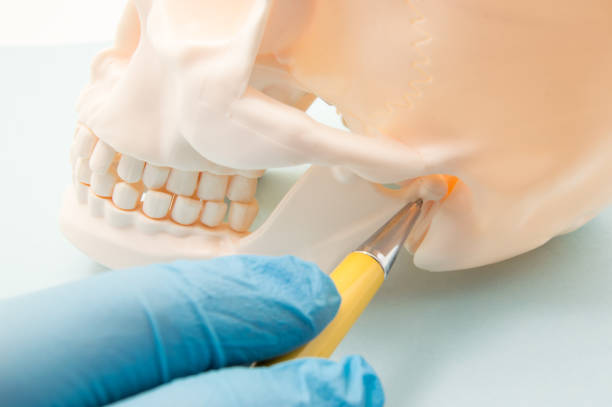
DTR Therapy may be considered for some patients with persistent jaw-muscle symptoms and bite findings that appear clinically relevant. Jaw pain, clenching, headaches, or clicking alone cannot show that someone is a candidate. A thorough exam, a careful diagnosis, a discussion of reversible options, and informed consent come first. That matters because DTR can permanently change tooth surfaces.
This guide explains which symptoms deserve a closer look and how a TMJ evaluation works. It covers what bite analysis with T-Scan and EMG can and cannot show. You’ll also learn when DTR is not the right fit and how it compares with other options for TMJ treatment in Wilmington, DE. Finally, it explains how a consultation at All About Smiles, guided by neuromuscular dentistry, can help you choose your next step.
A potential candidate for DTR Therapy has persistent jaw-muscle symptoms, bite findings that may relate to those symptoms, and a diagnosis that supports a bite-focused approach. Candidacy comes from a clinical assessment. No symptom checklist or single digital measurement can decide it alone.
Disclusion Time Reduction (DTR) is a computer-guided bite adjustment. It aims to shorten how long the back teeth stay in contact when the jaw moves side to side or forward.
Many people have symptoms consistent with temporomandibular disorders (TMD). Fewer are suitable for an occlusal intervention, which changes how the teeth meet. At All About Smiles, we evaluate which of our DTR Therapy and TMJ treatment options fits your situation.
The masseter muscles in your cheeks and the temporalis muscles at your temples do much of the chewing work. Together with other jaw muscles, they are called the masticatory muscles.
Common complaints include aching while chewing, tender muscles, and jaw fatigue after meals or long conversations. Symptoms may worsen with repetitive jaw use, such as gum chewing or daytime clenching.
Tender muscles prompt a closer look at jaw function during the clinical exam. Still, muscle pain has many possible causes, including stress, posture, poor sleep, injury, and overuse. Muscle pain alone does not mean the bite is the problem.
Some patients still have discomfort after self-care, physical therapy, or a stabilization appliance prescribed for their condition. Ongoing symptoms deserve a fresh look rather than an automatic move to DTR.
Your dentist will review how long symptoms have lasted, your earlier diagnosis, and whether you used prior treatment as directed. They’ll also ask how much symptoms limit daily function and whether anything made them worse.
These answers may point to a missed diagnosis or a different reversible approach. In some cases, they support further DTR assessment.
Digital occlusal analysis can show premature contacts, where some teeth touch before others. It can also reveal posterior interferences, where back teeth rub during side-to-side movement. Bite timing analysis and force distribution show whether bite pressure is uneven.
DTR focuses on disclusion time, which describes how quickly back teeth separate during jaw movement. These findings document how your bite behaves. They cannot prove on their own that your bite causes your pain. Your dentist looks for whether the bite data lines up with your symptoms and exam findings.
Good candidates take part in shared decision-making. Your dentist should explain the findings, the possible benefits, and what research does and does not yet show.
Precise measurement is not the same as proven benefit. A device can time tooth contacts to a fraction of a second, yet that precision cannot guarantee your symptoms will improve. Informed consent means you understand that enamel changes are permanent and that reversible alternatives exist.
Symptoms are clues, not a diagnosis. Each section below covers what you may feel, what may explain it, and what your dentist checks before connecting it to your bite.
You may feel aching in your cheeks or temples while eating, along with tightness or a jaw that tires quickly. Muscle pain often feels dull and spread out. Joint pain tends to sit just in front of the ear and may feel sharper.
Your dentist checks whether pressing on these areas reproduces your familiar pain. They also check whether pain limits opening or chewing.
Waking with a sore jaw, tight temples, or flattened tooth edges may point to bruxism. Sleep bruxism happens during sleep. Awake bruxism usually involves daytime clenching, often during concentration or stress. Both can tire the jaw muscles and wear down teeth.
Bruxism has many contributors, including stress, sleep patterns, some medications, and caffeine or alcohol use. Sleep-related breathing problems may also play a role in some people. Because of these varied causes, bruxism alone does not prove DTR is indicated.
Some people get headaches near the temples that come with jaw pain and worsen with chewing or clenching. These are called headaches attributed to TMD. Jaw-muscle activity may contribute, and jaw movement may change how the headache feels.
Migraine, tension-type headache, and other primary headache disorders are different conditions. DTR is not an established treatment for migraine. Headaches with new, severe, or unusual features need medical evaluation.
A click or pop when opening, a jaw that catches, or a jaw that shifts to one side often relates to the disc inside the joint. Joint-disc problems may need a different approach than bite adjustment.
Painless clicking alone often needs no treatment. Your dentist checks whether clicking comes with pain, locking, or limited opening before recommending any care.
Your bite may feel off, or one tooth may seem to hit first. This sometimes starts after a new crown or filling. A restoration that sits slightly high can create a single high contact.
A bite can also feel different because of muscle tension, joint changes, or a problem with one tooth. Your dentist confirms which contacts are involved and rules out cracked teeth, inflamed nerves, gum problems, and joint disorders. A single high filling may only need a small correction, not a full DTR protocol.
At All About Smiles, the evaluation follows a clear sequence. Each step narrows down possible causes before any treatment is recommended. This process helps patients in Wilmington and nearby Delaware communities understand why a recommendation fits their situation.
Your visit begins with a conversation. Your dentist will ask about:
Jaw pain can overlap with headache disorders, neck pain, sinus problems, and nerve-related pain. A broad history supports a differential diagnosis, which means weighing all possible causes before settling on one.
Next, your dentist measures how wide you can open and watches the path your jaw follows. They press gently on the jaw muscles and joints, listen for joint noises, and ask about locking.
An important question is whether the exam reproduces your familiar pain. This helps separate muscular TMD, which involves the chewing muscles, from intra-articular disorders inside the joint. These two groups often need different treatment.
Pain that feels like a TMJ problem can come from a tooth. Decay, cracks, an inflamed or infected pulp, gum disease, and failing or recent restorations can all cause pain that spreads to the jaw.
That’s why a patient with “TMJ pain” may still need dental X-rays, tooth testing, or a referral to an endodontist. Treating a tooth problem first avoids adjusting the bite for pain that started somewhere else.
T-Scan uses a thin sensor that you bite on to record contact timing and relative force between the left and right sides. Our earlier article explains how T-Scan records bite timing in more detail.
T-Scan has clear limits. It shows relative force rather than absolute bite force. It cannot diagnose TMD by itself or identify the source of your pain.
Surface electromyography (EMG) places small sensors on the skin over selected muscles, such as the masseter and temporalis. The sensors record electrical activity as those muscles work.
Some clinicians record EMG alongside T-Scan and review both with your symptoms. EMG is not a standalone diagnostic test for TMD, and results can vary with sensor placement and posture.
Your dentist then brings all the findings together. Most patients fall into one of three groups:
Reversible care usually comes first. Your dentist also discusses the evidence behind each option, your preferences, and whether a specialist should be involved.
T-Scan and EMG show how your bite and jaw muscles behave, which helps your dentist judge whether bite findings relate to your symptoms.
Occlusion time is the time from the first tooth contact until the teeth reach full contact. Full contact, called maximum intercuspation, is the position where your teeth fit together most completely.
A longer occlusion time may suggest that some teeth hit early while others lag behind. Dentists document it to see whether your closing bite is balanced before they assess jaw movement.
Disclusion time measures how long the back teeth stay in contact once the jaw begins moving out of full contact. It ends when only the front teeth guide the movement.
DTR protocols focus on these posterior contacts during side-to-side and forward movements. Supporters of DTR propose that prolonged back-tooth contact may keep the chewing muscles more active than necessary.
T-Scan shows how force shifts between sides and the sequence in which teeth contact. A posterior interference is a back-tooth contact that may interrupt smooth jaw movement.
An observed interference is not automatically harmful. Many people have interference without any symptoms.
EMG may show higher muscle activity during certain jaw movements. One study of computer-guided occlusal adjustment reported lower masseter activity and less self-reported pain one month after treatment. The study included 34 patients with chronic facial muscle pain.
Findings like these are encouraging but limited in size and follow-up time. Higher muscle activity and pain can also occur together without one causing the other. Correlation does not prove causation.
Device output is objective but narrow. It records what your teeth and muscles do during specific tests, not why you hurt. Your dentist combines it with your history, exam results, dental findings, and goals before making any recommendation.
There is no universally validated checklist for DTR eligibility. The situations below call for another diagnosis, a different treatment pathway, or extra caution.
According to the National Institute of Dental and Craniofacial Research, TMDs include more than 30 conditions affecting the jaw joint and chewing muscles. Symptoms resolve without treatment for many people. This is one reason conservative care usually comes first.
Disc displacement, inflammatory arthritis, degenerative joint changes, jaw locking, and limited opening all involve the joint itself. Correcting tooth contacts does not necessarily address what is happening inside the joint. Imaging, joint-focused care, or referral to an oral surgeon or orofacial pain specialist may be needed.
Tooth-specific pain needs a diagnosis before any bite treatment. Adjusting the bite around a cracked or infected tooth could hide the real problem and delay care.
If the exam finds no jaw-muscle or joint involvement, a bite adjustment is not a suitable headache treatment. Migraine, tension-type headache, and neurological conditions need medical evaluation instead.
Some people have pain in several areas of the body or facial pain without a clear cause. In central sensitization, the nervous system becomes more sensitive and amplifies pain signals. Persistent idiopathic facial pain describes ongoing facial pain with no identifiable dental or medical source.
These conditions often overlap with others, such as chronic headaches or fibromyalgia. Irreversible treatment deserves particular caution here. Changing tooth contacts may not address how the nervous system processes pain.
Self-management is usually the first step. This may include softer foods, jaw rest, heat or cold, stress management, and avoiding gum chewing. TMJ physical therapy and reversible appliances are also common early options.
An irreversible bite procedure should not be treated as routine first-line care for TMD.
DTR involves reshaping enamel, so your dentist assesses the health of the teeth involved. This includes enamel thickness, existing crowns and fillings, gum and bone support, and any loose teeth.
Worn teeth or extensive restorations may change the plan or rule out adjustment on certain teeth. These decisions are made case by case rather than from a fixed list.
Each treatment plays a different role. None is automatically the best choice for every patient.
| Treatment | Primary Role | Reversible? | Best-Fit Discussion |
|---|---|---|---|
| Self-Care and Habit Modification | Reduce aggravating behaviors and discomfort | Yes | Often part of initial care |
| TMJ-Focused Physical Therapy | Improve jaw movement and muscular function | Yes | Functional limitation or muscular symptoms |
| Stabilization Splint/Night Guard | Protect teeth and sometimes manage symptoms | Generally yes | Selected patients; monitor for adverse effects |
| DTR Therapy | Occlusal intervention targeting disclusion time | No, if enamel is adjusted | Requires careful patient selection and consent |
| Specialist/Medical Care | Address joint pathology or other pain conditions | Varies | Complex or unclear diagnoses |
A night guard or stabilization splint is removable. It protects teeth from grinding wear and may ease symptoms for some patients. If it doesn’t help, you can stop wearing it.
DTR, by contrast, is a one-way change to the bite. Night guards still need monitoring, since some designs can affect the bite over time.
Physical therapy may be a better fit when muscle tenderness, stiffness, or limited opening is the main concern. Exercises, manual therapy, and posture training can help restore jaw movement. It also suits patients who prefer a reversible, non-dental approach.
TMD often has several contributing factors, so a plan may combine self-care, physical therapy, an appliance, and stress or sleep support. All About Smiles also works with integrated partners such as chiropractors and massage therapists. DTR may become one part of that plan, but adding it does not guarantee better results.
Your dentist reviews what the evaluation found and what remains uncertain. They explain the expected benefits and possible risks, such as temporary sensitivity or symptoms that don’t improve. They also outline your alternatives. You should have time to ask questions before agreeing to treatment.
DTR protocols use targeted occlusal adjustment guided by digital measurements. The dentist reshapes small areas of enamel on selected back teeth so they separate more quickly during movement. Our step-by-step guide explains how DTR Therapy works at each stage.
Enamel reduction is irreversible. Enamel does not grow back, which is why careful selection and consent come first.
Follow-up visits track your pain levels, chewing comfort, jaw opening, and exam findings. Improved T-Scan readings alone do not prove that pain has been managed successfully. What matters most is how you feel and how well your jaw functions.
If symptoms don’t improve, the next step is to revisit the diagnosis. Repeated adjustments without a clear reason remove more enamel without a clear benefit. Referral to an orofacial pain specialist, physician, or physical therapist may offer a better path forward.
TMD is multidimensional. Muscles, joints, teeth, sleep, stress, posture, and overall health may all play a role. Your bite is one possible factor, not the explanation for every case.
All About Smiles takes a whole-body approach to dental care, so your evaluation considers the full picture rather than a single measurement.
Neuromuscular dentistry looks at how muscles, joints, and teeth work together. Your dentist can walk you through what your bite and muscle recordings show and what they don’t. That way, decisions are made with you, based on your goals as well as the findings.
Care should follow your diagnosis. Some patients leave with a DTR plan. Others leave with a physical therapy referral or a self-care routine. Both outcomes are a success when they match the underlying problem, and you understand the reasoning.
A good candidate has persistent jaw-muscle symptoms, bite findings that appear related, and a diagnosis that supports a bite-focused approach. Candidacy is determined after a comprehensive exam, not from symptoms alone. Most candidates have also tried reversible treatments first. Your dentist will confirm that tooth, joint, and headache conditions have been ruled out.
It may help some patients with muscle-related jaw pain and relevant bite findings. Early research is encouraging, but studies are small, and outcomes vary from person to person. DTR cannot guarantee relief. Your dentist should explain what the evidence shows and how your specific findings affect your expected results.
No. TMD includes joint disorders, muscle disorders, and headaches linked to the jaw. Many joint problems, such as disc displacement or arthritis, need different care. Many people also improve with conservative treatment alone. DTR is considered only for selected patients after a thorough evaluation.
Not necessarily. Bruxism has many contributing factors, including stress, sleep patterns, medications, and possibly sleep-related breathing problems. Grinding or clenching alone does not make someone a DTR candidate. Your dentist evaluates bruxism separately and may recommend a night guard, sleep evaluation, or other care first.
DTR is not an established treatment for migraine. Some headaches are linked to jaw-muscle activity, and these may be evaluated as part of a TMD exam. Migraine is a separate neurological condition. If you have frequent migraines, a physician or headache specialist should be involved in your care.
The evaluation itself involves biting on a thin sensor and gentle muscle and joint checks. Most patients find this comfortable. A bite adjustment is a different experience, and some patients notice temporary tooth sensitivity afterward. Your treating dentist can explain what to expect and how comfort is managed during each visit.
The bite adjustment is permanent because it removes small amounts of enamel from selected teeth. The evaluation is different. T-Scan, EMG, and the clinical exam do not alter your teeth. Reversible options, such as a stabilization splint or physical therapy, can be stopped if they don’t help. This difference is why informed consent comes before any adjustment.
T-Scan records the timing and sequence of tooth contacts and how force is shared from side to side. It also measures disclusion time during jaw movement. For DTR candidates, your dentist looks at whether long disclusion times or uneven contacts match the side and pattern of your symptoms. The scan itself does not change your teeth.
You still have options. Self-care, physical therapy, a stabilization appliance, or treatment for a tooth or joint problem may fit better. Some patients need referral to a specialist or physician for a related condition. Not qualifying for DTR simply means another path matches your diagnosis.
All About Smiles offers TMJ and bite evaluations at our office on Limestone Road in Wilmington, DE. The evaluation looks at your symptoms, jaw function, teeth, and bite. Not every patient will be recommended for DTR. Instead, you’ll receive a recommendation based on your diagnosis and goals.
If you live with persistent jaw pain, muscle tenderness, chewing discomfort, or TMD symptoms that haven’t improved, a comprehensive evaluation is a good next step. At All About Smiles, Dr. Grace Liu and Dr. Lewis Yu bring a neuromuscular dentistry approach to every TMJ visit.
Your evaluation starts with understanding your symptoms. Next, we assess your jaw function and oral health. Then we review any relevant bite findings. Finally, we discuss which treatment options fit your diagnosis.
As your TMJ dentist in Wilmington, All About Smiles can help you decide whether DTR Therapy, conservative care, or another approach fits best. Schedule a TMJ and bite evaluation today, or call our new patient line at (302) 600-1165.

It all adds up to better health, smile, body, and spirit!